
Overview
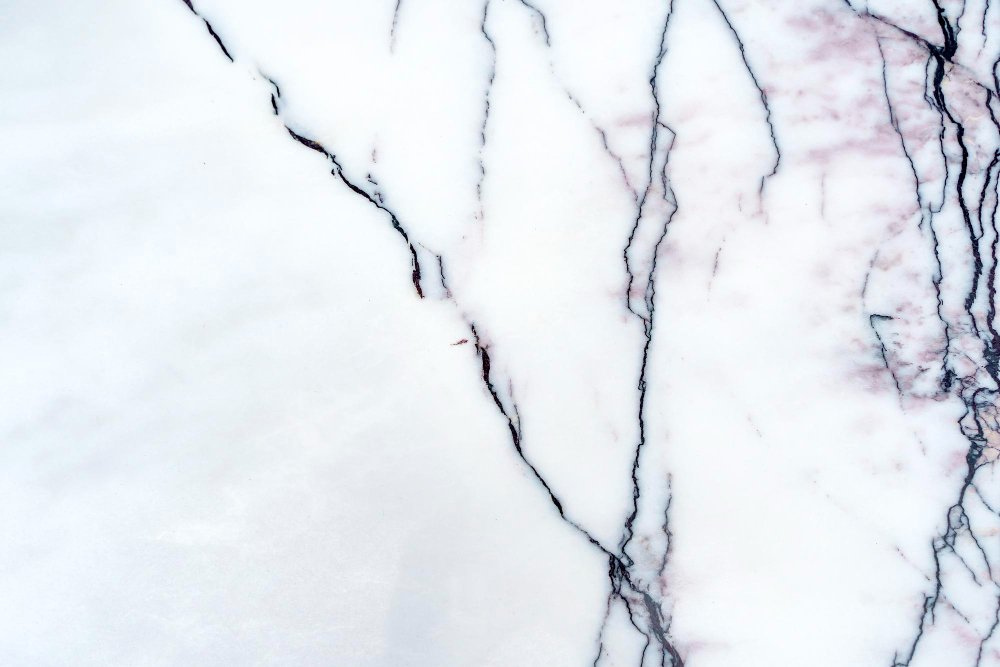
Both granite and quartz offer beautiful interpretations of white countertops with bold veining, but they achieve that appearance differently. Granite is a natural stone formed over millions of years. Every slab is unique, meaning no two kitchens will ever look exactly alike. Quartz, by contrast, is an engineered material manufactured to provide greater consistency while still recreating the sophisticated appearance of natural stone. Many modern white quartz with black veins kitchen designs closely resemble premium granite while offering additional practical advantages.| Feature | White Granite with Black Veins | White Quartz with Black Veins |
|---|---|---|
| Appearance | Completely unique natural patterns | Consistent engineered veining |
| Material | Natural stone | Engineered quartz |
| Maintenance | Requires periodic sealing | No sealing required |
| Pattern Consistency | Varies by slab | Highly consistent |
| Customization | Limited by available slabs | Wide selection of designs |
Option A: White Granite with Black Veins
Natural granite has long been admired for its authenticity. The movement of mineral deposits creates intricate veining that simply cannot be duplicated perfectly by nature—or by manufacturing. For homeowners who appreciate one-of-a-kind materials, white granite with black veins delivers exceptional visual character. Every countertop becomes an original piece of natural art. Pros- Completely unique natural patterns.
- Excellent heat resistance.
- Adds natural stone appeal.
- Strong long-term durability.
- Each slab is one of a kind.
- Requires periodic sealing.
- Patterns cannot be perfectly matched across slabs.
- Natural variation may make slab selection more difficult.
- Some stones may be slightly porous.
Best ForHomeowners who value authentic natural stone and appreciate the uniqueness of every countertop.
Option B: White Quartz with Black Veins
Engineered quartz has become one of today’s most popular countertop materials because it combines elegant design with everyday practicality. Modern quartz countertops with black veins recreate the dramatic movement of natural stone while offering greater consistency from slab to slab. This makes planning large kitchens, waterfall islands, and matching backsplashes much easier. Because quartz is nonporous, it also requires very little ongoing maintenance. Pros- No sealing required.
- Excellent stain resistance.
- Consistent veining across slabs.
- Large variety of colors and patterns.
- Easy everyday maintenance.
- Less heat resistant than granite.
- Does not have naturally occurring patterns.
- Premium designer collections may cost more.
Best ForBusy households seeking luxury aesthetics with minimal maintenance.
Read More in Kitchen Promise Blog
- Built-In Bar Cabinets: A Step-by-Step Guide to Planning the Perfect Home Beverage Station
 Discover how to plan built in bar cabinets that combine style and functionality. Follow this step-by-step guide to choose the ideal layout, storage, appliances, and finishing details.
 - Kitchen Remodeling Services in Granite, ID: Create a Functional and Beautiful Gathering Space
 Learn how modern kitchen renovations transform everyday living with smart layouts and efficient upgrades.
 - How to Renovate a Dining Room for Better Functionality and Style
 Dining room renovations improve comfort, organization, and entertaining functionality. This guide explains lighting, storage, acoustics, layout planning, and modern design strategies for stylish and practical dining spaces.
Side-by-Side Comparison
Choosing between granite and quartz often comes down to personal priorities rather than identifying one universally superior material.| Comparison | Granite | Quartz | Winner |
|---|---|---|---|
| Natural Beauty | Excellent | Very Good | 🏆 Granite |
| Maintenance | Moderate | Low | 🏆 Quartz |
| Heat Resistance | Excellent | Very Good | 🏆 Granite |
| Stain Resistance | Good | Excellent | 🏆 Quartz |
| Pattern Consistency | Variable | Excellent | 🏆 Quartz |
| Unique Appearance | Excellent | Good | 🏆 Granite |
| Ease of Care | Good | Excellent | 🏆 Quartz |
Winner Highlights
- Choose Granite if you want one-of-a-kind natural beauty and superior heat resistance.
- Choose Quartz if you prioritize low maintenance, stain resistance, and consistent design.
- Both materials provide excellent long-term durability when professionally installed.